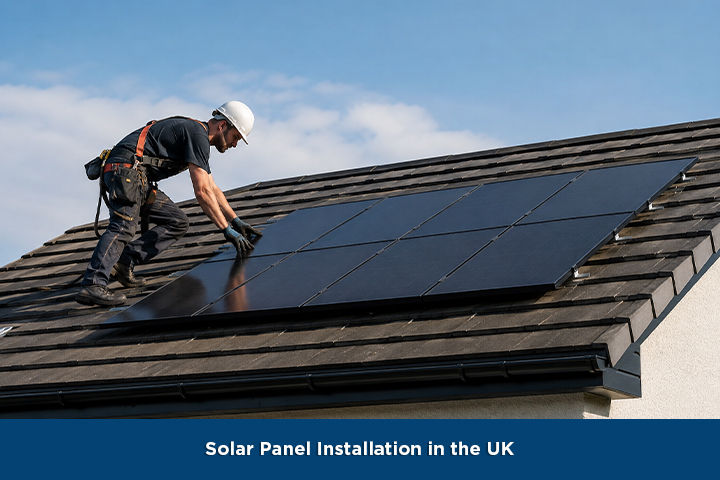

A lot of UK homeowners would like to get renewable energy for cheaper bills. However, people ignore an important aspect! Energy bill savings are possible only when solar panels are installed correctly while meeting UK standards.
The most important factor is your roof design and its direction towards sunlight. That is why you should first check whether solar panels are right for your property. A proper solar panel roof assessment helps avoid costly mistakes later.
This solar panel installation guide explains every step in simple words. You will learn the solar panel installation process, financing options, planning rules, and post-installation support.
Solar Panel Installation Process
Around 98% of houses in the UK will be suitable for solar panels regardless of whether there is sunny or cloudy weather outside. Here, we have listed an explanation of how the process works.
Step 1: Check If Solar Panels Are Right for Your Property
Check if your house is good for solar panels. It is the first requirement for the solar installation.
Direction of Your Roof
South-facing roofs usually produce the most solar electricity. However, east-facing panels and west-facing panels also perform well across the UK.
Shading by Trees or Nearby Buildings
Too much shade lowers the electricity generated by the panels. Small amounts of shade are manageable. Modern systems also perform better with solar panels in shade than older systems.
Available Space
Many people ask, how much roof space do solar panels need? The answer depends on your energy use and the type of solar panels. A larger roof allows more solar PV panels.
Decide About the Number of Solar Panels
Your electricity use decides how many panels you need. Available roof space also matters. More panels create more electricity and increase savings. However, they also increase installation cost.
You should also decide if you want to export excess solar electricity through the Smart Export Guarantee (SEG). This can provide extra income. Typical panel numbers include:
- Mid-terrace home: 4–6 panels
- End-terrace or semi-detached home: 8–10 panels
- Small detached home: 12–16 panels
- Large detached home: 18–22 panels
A professional solar panel roof assessment helps choose the correct system size.
Off-grid solar living is feasible but difficult to achieve in the UK. However, the majority of homeowners opt for hybrid installations to use solar and grid energy. If you want professional advice, contact a solar installer today.
Step 2: Decide About Financing Option
After checking your property, discuss payment options with your installer. Most MCS-certified solar panel installers offer flexible payment plans.
Pay 100% Upfront
This option avoids finance charges. It also gives full ownership immediately.
Pay Nothing or Partly Upfront
Some companies allow low deposits. The remaining balance is paid through monthly instalments. Choose a payment plan that matches your budget.
Step 3: Find an MCS-Certified Installer
When finding the right solar panel company to install, consider carefully. Do not go just with cheap quotes because low prices may mean using inferior materials.
A poor installation may reduce system life. A quality system can serve for around 30 years with proper care. Compare installers using these points:
- Years of experience
- MCS-Certified and TrustMark Registered
- Installation warranty
- Flexible payment plans
- Professional service and trusted reviews
Reliable Microgeneration Certification Scheme installers provide better long-term value.
DIY Mounting Solar Panels vs Professional Installation
Many people search for how to install solar panels themselves. DIY installation may reduce labour costs. However, mistakes can damage your roof or wiring.
Professional solar panel fitting offers safer results. Qualified installers also complete testing and certification correctly. It is best to get professional installation for most people.
Step 4: Installer Makes Design and Planning
This stage is an important part of solar panel installation preparation. A good installer measures your property carefully. Many companies also create a 3D design before work begins. The design shows where panels will sit. It also explains the expected electricity generated every year.
Solar Panel Planning Permission
Many people ask, do you need planning permission for solar panels? Most homes do not need solar panel planning permission. However, approval may be required if your property is:
- A listed building
- Located inside a conservation area
You can always check with the local planning authority before starting the installation process.
Step 5: Installing the Solar Panel System
Installation of the system is done within 1-3 days. All depends on the system size. One often asked question by homeowners: “How long does it take to install solar panels?” Most standard homes are completed within two days.
Setting Up Scaffolding
The team installs scaffolding first. This keeps workers safe during installation.
Fixing Brackets
Powerful brackets will be attached firmly to the roof to hold the entire solar panel’s mounting system.
Installation of the Mounting Frame for the Solar Panels
The crew installs the mounting frame on the roof. Possible mounting options include:
- Roof Hook and Frame: The most common choice for tiled roofs.
- Fixed Tile Hook: Special hooks hold panels firmly without damaging roof tiles.
- Solar Panels on Flat Roofs: Solar panels on flat roofs use angled frames for better sunlight.
- Ground Mounted Solar Panels: Ground-mounted solar panels work well when roof space is limited.
- Solar Panels on Garage Roofs: Solar panels on garage roofs can increase total generating capacity.
Solar Panels on Shed Roofs: Solar panels on shed roofs are another useful option for suitable buildings.
Connection with the Inverter
After mounting is finished, the solar panels and inverter will be connected by an electrician. An inverter converts DC electricity generated by the panels into AC used in your household.
Battery Storage Installation
A battery option is very popular among many homeowners because it is possible to store excess solar energy generated during the day to use in the evening.
Solar Panel DNO Registration
Most systems require solar panel DNO registration. Your installer normally completes this process with your local Distribution Network Operator. This ensures your solar PV system meets network requirements.
Post-Installation Support
Once installation is complete, your installer performs final testing. They explain how to monitor your solar production through an app or display. This answers the question, what happens after solar panel installation.
You should also register for solar-friendly energy tariffs. These tariffs can help make more money from the exported electricity. Regular servicing of solar panels helps to maintain good performance for years.
Installing Solar Panels or Buying a Solar Home
Some people install a home solar panel system themselves. Others buy homes with existing solar panels. Buying a solar home avoids installation delays. However, always inspect the existing system carefully.
DIY solar installation gives homeowners more control over installation, components, design, and even warranties. Both options can reduce energy bills and help to utilise renewable sources.
Solar Array Weight Guide
Most people are concerned about installing solar panel systems on their roofs. On average, a typical solar PV system features solar panels, which weigh around 15 kg- 30 kg apiece. A typical 4 kW solar system comprises 10-14 solar panels. This weight range can be easily tolerated by any modern roof.
Older roofs may need strengthening before installation. Roof strengthening increases solar panel installation costs. It is much better to inspect the roof before signing any contract. A professional assessment will help you determine whether your roof is suitable for a solar panel installation.
Final Thoughts
Considering a solar system is the beginning of saving money and producing environmentally friendly electricity. Proper planning will ensure a smooth installation process. Use the skills of certified and qualified solar PV installers and high-quality equipment.
A well-developed solar system can serve you for decades. Proper planning guarantees that solar panels in the UK are always the right choice.
Frequently Asked Questions
Can I install solar panels myself in the UK?
Yes, there is no legal prohibition to DIY install solar panels at your property. However, the installation is not as simple as anybody can imagine. So, it is advisable to hire an MCS-certified installer who can do the job more professionally to save your investment.
What is the average lifespan of a solar panel?
Usually, solar panels are operational for up to 30 years in the UK, with an estimated power output drop from 0.2% to 0.5% each year. However, the solar panel life depends on the quality of the installation, maintenance, and weather conditions.
What are the downsides of buying a house with solar panels?
The biggest risks include taking over a costly third-party lease or power purchase agreement (PPA), dealing with complex legal paperwork, paying for future roof repairs or panel removal, and replacing aging equipment like the inverter.
Can you put solar panels on a flat roof?
Yes! Solar panels can be installed on flat roofs using angled frames for better sunlight. The angle is calculated based on the direction of the sun over the roof.