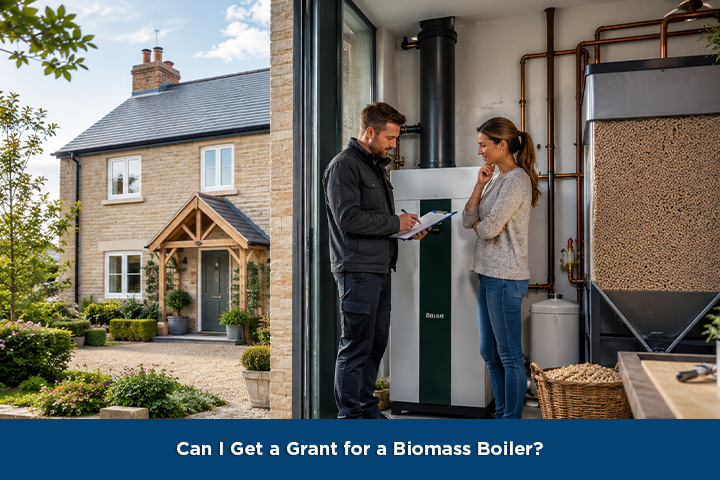

For those villagers living in their homes who have the capacity to utilize biomass fuel for their heating needs, the first thing they search for is a grant for a biomass boiler. Many want to replace existing fossil fuel heating with an expensive electric heating system. Fossil fuel heating is more likely to emit carbon dioxide, and electric heating will increase energy bills.
The UK government launched the Boiler Upgrade Scheme to encourage the installation of low-carbon heating and reduce reliance on fossil fuels. The grant scheme provides government funding and financial support for eligible property owners.
For houses that are not hooked up to the gas grid, a biomass boiler might get you support. In this little guide, you can read through the fine points of the Boiler Upgrade Scheme, who’s eligible for the grant, and the steps needed to apply.
What Is a Biomass Boiler?
It refers to the use of renewable energy for the heating of one’s house. The process involves burning organic matter to generate heat. Common biomass fuels include:
- Wood pellets
- Wood chips
- Logs
- Agricultural waste
Biomass is often mentioned as a renewable energy resource, not really because it’s magic, but because it comes from natural sources. A lot of people, especially those who live outside the bigger towns, find it relatively straightforward to fit these boilers in their own homes.
Can You Get a Grant for a Biomass Boiler?
Yes, there are biomass boiler grants available through the Boiler Upgrade Scheme. This government grant supports the installation of approved renewable heating technologies. The scheme supports:
- Air source heat pumps
- Ground source heat pumps
- Biomass boilers
If you are replacing an existing gas boiler or another existing fossil fuel heating system, you may be eligible for the Boiler Upgrade Scheme. The program allows owners to switch to a low-carbon heating system.
When getting ready to replace the current boiler, people tend to compare a heat pump or biomass boiler. The best option depends on the property and fuel availability.
Claim Your 7,500 Voucher Now
Boiler Upgrade Scheme Explained
The Boiler Upgrade Scheme is a government-backed programme operating in England and Wales. The scheme provides upfront capital grants that reduce the upfront installation cost of eligible systems.
The Boiler Upgrade Scheme provides a grant for heat pumps and biomass installations. The purpose of the scheme is to encourage the use of low-carbon heating in houses.
The scheme works through approved installers. An MCS-certified installer submits the application and manages the process. After approval of the application, the installer gets the grant through reduction from the invoice for services.
How Much Is the Grant?
The grant allows homeowners to significantly reduce expenses associated with the installation of renewable heating systems. Although exact costs vary from one to another, the grant reduces the expenses for the heating system installation. Thus, a biomass boiler becomes more affordable.
The scheme partially funds the installation of the boiler, while homeowners typically pay for the rest of the cost.
Eligibility for the Boiler Upgrade Scheme
Meeting the eligibility criteria is essential before applying. You may be eligible for the scheme if:
- You are a homeowner or qualifying landlord.
- Your property is located in England and Wales.
- You are replacing an existing heating system.
- Your home is not connected to the gas grid.
- You have a valid Energy Performance Certificate.
- The installation is completed by an MCS-certified installer.
The installer will assess your eligibility for the Boiler Upgrade Scheme and explain any additional requirements.
Why Biomass Boilers Are Often Used Off the Gas Grid
As a rule, a biomass boiler is installed in rural properties that have no connection to the gas network. Most rural dwellings use oil, coal, and electric heating. Replacing these systems with renewable heating can reduce dependence on traditional fuels.
In many cases, biomass boilers prove to be highly efficient, low-carbon heating for houses and rural properties. Besides, a biomass boiler enhances energy efficiency in combination with proper insulation of the building.
Energy Efficiency Requirements
A valid Energy Performance Certificate is necessary for determining the eligibility of a property for the grant. Moreover, the assessment might include recommendations concerning energy efficiency improvements before the installation of a renewable heating system.
Higher energy efficiency results in lower consumption of energy for heating a property.
The Importance of MCS Certification
To receive support, the installation must meet standards set by the Microgeneration Certification Scheme. Your chosen installer must be MCS certified. After completion, they provide an MCS certificate confirming compliance.
Homeowners should always find an MCS-certified installer before starting an application. This is essential for accessing government funding or support through the scheme.
Biomass Boiler or Heat Pump?
Many property owners compare a heat pump or biomass boiler before making a decision. Both air source heat pumps and ground source heat pumps are popular among owners who wish to get a grant.
In turn, a heat pump is suitable for households with high energy efficiency (insulated walls and low heating requirements).
However, a biomass boiler can become a solution for large rural homes where there is enough biomass fuel. Thus, the selection depends on the property and heating needs.
How to Apply?
To apply for the Boiler Upgrade Scheme, contact an approved installer.
The installer will:
- Assess your property.
- Check your eligibility.
- Provide a quotation.
- Submit the application.
- Complete the boiler installation.
The installer will also explain whether your property is eligible for government support. Once approved, the grant is applied by deducting the grant from the final invoice.
Other Grants and Support
Although the Renewable Heat Incentive program is closed for new applications, the Boiler Upgrade Scheme currently funds many renewable heating projects.
Also, depending on where you are, some homeowners can look at regional funding routes (for example, Nest Scheme Wales), and then compare what fits best. Figuring out which grants are actually open to you helps households choose the most suitable financial option, rather than just guessing.
Conclusion
If you’re looking at boiler grants in the UK, you may be able to apply for a biomass boiler grant via the Boiler Upgrade Scheme. Under this scheme, you can receive funding for the installation of a biomass boiler, air source heat pumps, and ground source heat pumps. The program offers financial incentives for the installation of low-carbon heating systems.
Specifically, for rural properties without a connection to the gas grid, a biomass boiler can act as a solid renewable heating approach. Before you submit anything, you should verify the eligibility conditions, make sure you have a current Energy Performance Certificate, and pick an MCS installer.
Frequently Asked Questions
How long does a biomass boiler usually hang around?
A well kept biomass boiler can often go on for 15 to 25 years. With regular servicing it tends to last longer and stay efficient.
Can I get a biomass boiler fitted in a listed building?
Yes, it might be doable. That said, listed buildings typically need extra permissions, before installation work even starts, so it’s worth checking first.
What sort of biomass fuel is used the most?
Wood pellets are the go to option. They’re easy to source, simple to store and give steady heat output, which is why people choose them.
Can a biomass boiler be paired with solar panels?
Yes, absolutely. A lot of homeowners combine a biomass boiler with solar panels. This helps energy efficiency go up, and often cuts the total running expenses.
Does a biomass boiler boost my property value?
Energy savvy upgrades can make a home feel more appealing to buyers. Still, whether your property value rises depends on local market conditions and what buyers actually want.